


Centrifugal Blower
Your Professional Centrifugal Blower Supplier
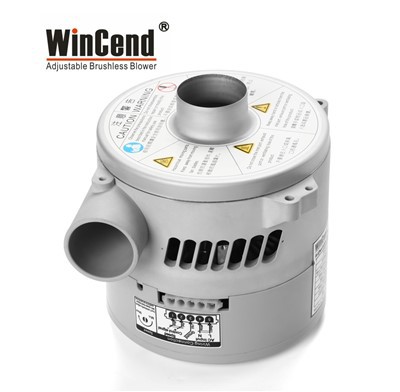
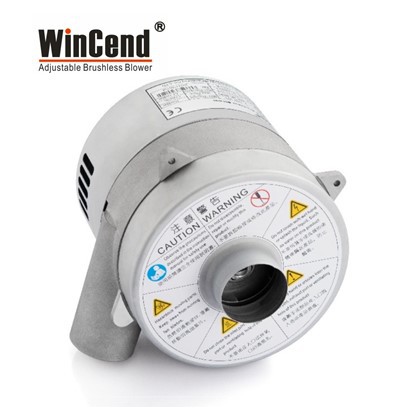
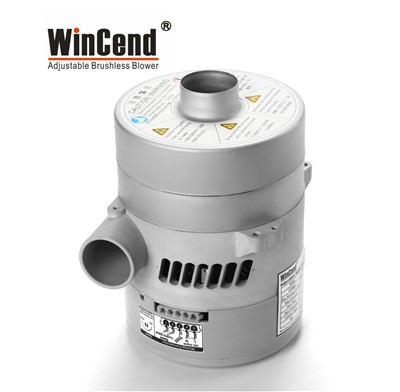
WinCend Technology (Shenzhen) Co., Ltd. was established in 2014 and is located in thegang District of Shenzhen, a high-tech hub. It is an integrated enterprise that combines research and development, production, sales, and service. High pressure blower; large flow blower; brushless speed control blower; DC inverter blower; custom blower; integrated motor we will develop with you with more diversified products and better services, look forward to cooperating with you sincerely!





Why Choose Us
Our Certificate
Our Obtain more than 40 patents and soft technology; national high-tech enterprise; CE certified products; ISO9001 national quality system certification.
Production Market
Our products are mainly sold to domestic enterprises and more than ten countries in Europe, America and Southeast Asia.
Our Service
We Comprehensive pre-sales consultation, technical guidance, after-sales support, and long-term maintenance services.
Strong R&D Capability
We More than 40 patents and software copyrights supported by continuous technological innovation.
Features of Centrifugal Blower
High Pressure: Centrifugal blowers are designed to generate high pressure, allowing them to move air or other gases through long distances and tight spaces.
High Flow Rates: Centrifugal blowers are designed to move large volumes of air or other gases quickly and efficiently.
Durability: Centrifugal blowers are designed to be durable and reliable, withstanding harsh environments and long-term use.
Low Noise: Centrifugal blowers are designed to be quiet, making them ideal for applications where noise is a concern.
Versatility: Centrifugal blowers can be used in a variety of applications, from air conditioning and ventilation to industrial processes.
Efficiency: Centrifugal blowers are designed to be energy efficient, helping to reduce energy costs.
Safety: Centrifugal blowers are designed to be safe, with features such as spark-proof motors and overload protection.

Radial Flow Blowers
Radial flow blowers are the most common type of centrifugal blower. In these blowers, air enters through the center of the impeller and is then forced outward, radially.
Axial Flow Blowers
Axial flow blowers differ from radial flow blowers in that the airflow is directed parallel to the axis of the impeller. Air moves straight through the blower, without the radial acceleration seen in radial flow blowers.
Mixed Flow Blowers
Mixed flow blowers combine the characteristics of both radial and axial flow blowers. In these blowers, the air is accelerated in a mixed flow path, meaning that the air undergoes both radial and axial flow components.
Working principle of Centrifugal Blower
Impeller Design
At the heart of a centrifugal blower is its impeller, which is responsible for generating the airflow. The impeller typically consists of curved blades or vanes, strategically positioned to optimize air movement. As the impeller rotates, it draws in air through the inlet and pushes it towards the outlet, increasing its velocity and pressure.
Air Inlet and Outlet
The design of the air inlet and outlet is crucial for efficient performance. The inlet is designed to allow smooth airflow entry, minimizing turbulence and pressure losses. Similarly, the outlet is shaped to ensure a gradual expansion of the airflow, reducing energy losses and noise levels. Proper positioning and sizing of the inlet and outlet are essential to achieve optimal performance.
Motor and Drive System
Centrifugal blowers are powered by electric motors, which drive the impeller's rotation. The motor's power and speed are selected based on the specific requirements of the application. The drive system, consisting of pulleys, belts, or direct coupling, transfers the motor's rotational energy to the impeller, ensuring a consistent and reliable airflow.
Key Components of a Centrifugal Blower
Impeller: The impeller is the heart of the centrifugal blower. It is a rotating component that accelerates air or gas and imparts kinetic energy to it. The impeller's design—whether it is backward-curved, forward-curved, or radial—affects the blower's performance and efficiency.
Volute (Casing): The volute, or casing, surrounds the impeller and helps guide the air once it has been accelerated. Its spiral shape converts the kinetic energy of the air into pressure, allowing the blower to achieve high-pressure output.
Motor: The motor powers the impeller, driving it to rotate at high speeds. Motor selection is essential for the performance of the centrifugal blower. The motor must be powerful enough to turn the impeller at the desired speed while maintaining optimal efficiency.
Inlet and Outlet: The inlet is where air enters the blower, typically positioned at the center of the impeller. The outlet is where the pressurized air exits the system. Proper design of these ports ensures smooth air intake and discharge, minimizing energy loss due to turbulence or backflow.
Bearings and Shaft: The shaft connects the impeller to the motor, transferring the rotational energy from the motor to the impeller. Bearings support the shaft, allowing it to rotate smoothly and with minimal friction.
Drive Mechanism: Depending on the blower's design, the impeller may be driven by a direct drive, belt drive, or gear drive mechanism. This component transmits the power from the motor to the impeller and can affect the blower's efficiency and maintenance requirements.
Food and Beverage Industry
In the food and beverage industry, maintaining proper air quality and ventilation is crucial to ensure product safety and hygiene. Centrifugal blowers are employed in ventilation systems, providing fresh air and removing odours, fumes, and contaminants.
Paper Production
In the paper production process, centrifugal blowers are used in multiple stages. They facilitate the removal of moisture from the paper pulp, ensuring the smooth operation of the drying process.
Chemical Processing
Centrifugal blowers play a vital role in chemical processing plants, where the movement of air or gases is crucial for various operations. They are used in air pollution control systems, capturing and treating harmful emissions.
HVAC Systems
Centrifugal blowers are integral components of heating, ventilation, and air conditioning (HVAC) systems. They help circulate conditioned air throughout buildings, ensuring comfortable temperatures and proper air quality.
