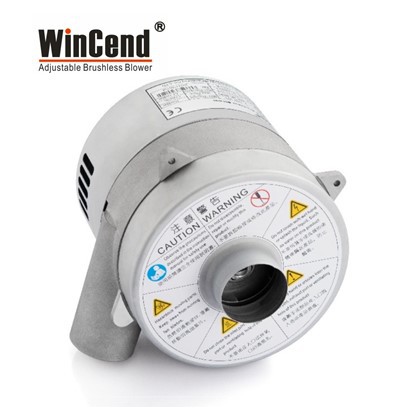
Hey there! As a supplier of Explosion - proof Centrifugal Fans, I often get asked about the energy efficiency of these bad boys. So, let's dive right in and break it down.
To start with, what exactly is an explosion - proof centrifugal fan? Well, it's a type of fan designed to operate safely in hazardous environments where there's a risk of explosive gases, vapors, or dust. These fans are built with special materials and features to prevent sparks or heat from igniting the surrounding explosive atmosphere.
Now, let's talk about energy efficiency. Energy efficiency in a fan refers to how well it can convert electrical energy into mechanical energy to move air. The more efficient a fan is, the less energy it consumes to produce a given amount of airflow.


One of the key factors that affect the energy efficiency of an explosion - proof centrifugal fan is its design. A well - designed fan will have an optimized impeller shape. The impeller is the rotating part of the fan that actually moves the air. If the impeller is shaped in a way that minimizes air turbulence and maximizes the transfer of energy from the motor to the air, the fan will be more efficient. For example, some modern explosion - proof centrifugal fans use backward - curved impellers. These impellers are known for their high efficiency because they can move a large volume of air with relatively low power consumption.
Another important aspect is the motor. The motor is the heart of the fan, and its efficiency plays a crucial role in the overall energy efficiency of the fan. High - quality, energy - efficient motors are designed to convert electrical energy into mechanical energy with minimal losses. Some motors are equipped with advanced control systems, like variable frequency drives (VFDs). A VFD allows the motor to adjust its speed according to the actual airflow requirements. This means that the fan doesn't have to run at full speed all the time, which can significantly reduce energy consumption.
The size of the fan also matters. If you choose a fan that's too big for your application, it will consume more energy than necessary. On the other hand, if the fan is too small, it won't be able to provide the required airflow, and you might end up using additional fans, which will increase energy consumption. So, it's important to carefully calculate the airflow and pressure requirements of your specific application and choose the right - sized explosion - proof centrifugal fan.
Now, let's compare explosion - proof centrifugal fans with some other types of fans.
First, let's take a look at the AC Centrifugal Fan. While AC centrifugal fans are widely used in many applications, explosion - proof centrifugal fans are specifically designed for hazardous environments. In terms of energy efficiency, if you're operating in a normal environment, an AC centrifugal fan might be a good choice. But in a hazardous area, the explosion - proof features of the explosion - proof centrifugal fan are essential, and modern designs can still offer good energy efficiency.
The High - power Centrifugal Fan is another option. High - power centrifugal fans are capable of moving large volumes of air, but they also tend to consume more energy. Explosion - proof centrifugal fans can be designed to have a good balance between power and energy efficiency, especially when they are equipped with the right motor and impeller design.
The Centrifugal Blower for Air Exchange is mainly used for air circulation and exchange. While explosion - proof centrifugal fans can also be used for air exchange in hazardous environments, they need to meet strict safety standards. The energy efficiency of an explosion - proof centrifugal fan in an air - exchange application depends on factors like the ductwork layout and the overall system design.
The High - efficiency Centrifugal Blower is focused on achieving the highest possible energy efficiency. Explosion - proof centrifugal fans can also achieve high efficiency levels, but they have the added challenge of maintaining safety in explosive environments. Manufacturers are constantly working on improving the design of explosion - proof centrifugal fans to make them as energy - efficient as possible.
When it comes to measuring the energy efficiency of an explosion - proof centrifugal fan, there are several metrics. One common metric is the specific fan power (SFP). The SFP is the power consumption of the fan per unit of airflow. A lower SFP indicates higher energy efficiency. Another metric is the fan efficiency, which is the ratio of the useful power output (the power used to move the air) to the power input (the electrical power consumed by the motor).
As a supplier of Explosion - proof Centrifugal Fans, I can tell you that we take energy efficiency very seriously. We invest in research and development to constantly improve the design of our fans. And we test our fans rigorously to make sure they meet or exceed industry standards for energy efficiency.
If you're in the market for an explosion - proof centrifugal fan, please contact us .