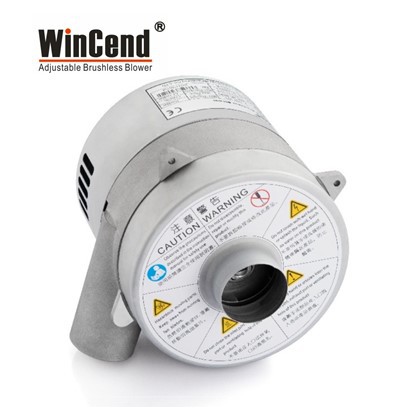
Do brushless blowers have variable speed settings?
As a supplier in the brushless blower industry, the question of whether brushless blowers have variable speed settings is one that I frequently encounter from customers. Variable speed functionality is a critical feature in many applications, as it offers flexibility, energy efficiency, and precise control. In this blog, I will explore the capabilities of brushless blowers in terms of variable speed settings, the benefits they provide, and the different types of brushless blowers that support this feature.
Understanding Brushless Blowers
Before delving into variable speed settings, it's important to understand what brushless blowers are. Unlike traditional brushed blowers, which use carbon brushes to transfer electrical power to the rotating part of the motor, brushless blowers rely on electronic commutation. This design eliminates the need for brushes, resulting in several advantages, including longer lifespan, higher efficiency, less noise, and lower maintenance requirements.
Brushless blowers are commonly used in a wide range of applications, such as ventilation systems, industrial cooling, air purification, and automotive applications. Their ability to provide reliable and efficient airflow makes them a popular choice for many industries.
Variable Speed Settings in Brushless Blowers
The short answer is yes, many brushless blowers do have variable speed settings. This is achieved through the use of advanced electronic controls that can adjust the speed of the motor according to the specific requirements of the application. There are several ways to implement variable speed control in brushless blowers:


- Pulse Width Modulation (PWM): This is one of the most common methods for controlling the speed of brushless motors. PWM works by rapidly switching the power supply to the motor on and off at a high frequency. By varying the width of the pulses, the average voltage applied to the motor can be adjusted, which in turn changes the motor's speed. PWM is a simple and cost - effective way to achieve variable speed control, and it is widely used in many brushless blowers.
- Voltage Control: Another way to control the speed of a brushless blower is by adjusting the input voltage. As the voltage supplied to the motor increases or decreases, the speed of the motor will change accordingly.
- Frequency Conversion: In some high - performance brushless blowers, frequency converters are used to control the speed. A frequency converter changes the frequency of the electrical power supplied to the motor, which directly affects the motor's speed. This method allows for very precise speed control over a wide range of speeds and is often used in applications where high - accuracy speed regulation is required.
Benefits of Variable Speed Brushless Blowers
The ability to adjust the speed of a brushless blower offers several significant benefits:
- Energy Efficiency: By operating the blower at the minimum speed necessary to meet the application's requirements, variable speed brushless blowers can consume significantly less energy compared to fixed - speed blowers. This is especially important in applications where the airflow requirements vary over time, such as in HVAC systems. For example, during periods of low demand, the blower can be set to run at a lower speed, reducing energy consumption and operating costs.
- Noise Reduction: In many applications, noise is a major concern. Variable speed brushless blowers can be adjusted to run at lower speeds when less airflow is needed, which results in reduced noise levels. This is particularly beneficial in environments such as offices, hospitals, and residential areas, where quiet operation is essential.
- Precise Control: Variable speed settings allow for precise control of the airflow rate, pressure, and other parameters. This is crucial in applications such as industrial processes, where accurate control of the airflow is necessary to ensure product quality and process efficiency. For example, in a painting booth, the speed of the blower can be adjusted to provide the optimal airflow for proper paint spraying.
- Extended Lifespan: By reducing the stress on the motor and other components, variable speed operation can extend the lifespan of the brushless blower. Running the blower at lower speeds when possible can reduce wear and tear, resulting in fewer maintenance requirements and a longer service life.
Types of Brushless Blowers with Variable Speed Settings
There are different types of brushless blowers available that come with variable speed settings. Here are some examples:
- Brushless Frequency Converter Blower: These blowers use frequency converters to control the speed of the motor. They offer high - precision speed control and are suitable for applications that require accurate airflow regulation, such as in cleanrooms or high - end laboratory equipment.
- Brushless Fan: Many brushless fans are designed with variable speed capabilities. They are commonly used for cooling applications in electronics, computers, and other equipment. The variable speed feature allows the fan to adjust its cooling performance according to the temperature of the equipment, ensuring efficient cooling while minimizing energy consumption.
- Brushless Speed - regulating Blower: These blowers are specifically designed for applications where variable speed control is required. They typically use PWM or voltage control to adjust the speed and are suitable for a wide range of applications, including ventilation, air circulation, and exhaust systems.
Factors to Consider when Choosing a Variable Speed Brushless Blower
When selecting a variable speed brushless blower for your application, there are several factors to consider:
- Speed Range: Determine the minimum and maximum speeds required for your application. Make sure the blower you choose can operate within this speed range and provide the necessary airflow and pressure at each speed.
- Control Method: Consider the control method that is most suitable for your application. PWM is a popular choice due to its simplicity and cost - effectiveness, while frequency conversion offers higher precision.
- Airflow and Pressure Requirements: Calculate the required airflow rate (in cubic feet per minute, CFM) and pressure (in inches of water column, IWC) for your application. Choose a blower that can meet these requirements at the desired speeds.
- Noise Level: If noise is a concern, look for a blower that operates quietly at all speeds. Some manufacturers provide noise level specifications for their blowers, which can help you make an informed decision.
- Reliability and Durability: Choose a blower from a reputable manufacturer that offers high - quality components and has a proven track record of reliability. Look for features such as over - temperature protection, over - current protection, and long - lasting bearings.
Conclusion
In conclusion, variable speed settings are a valuable feature in brushless blowers, offering energy efficiency, noise reduction, precise control, and extended lifespan. WinCend as a brushless blower supplier, we offer a wide range of products with variable speed capabilities to meet the diverse needs of our customers. Whether you are looking for a Brushless Frequency Converter Blower, a Brushless Fan, or a Brushless Speed - regulating Blower, we have the expertise and the products to provide you with the best solution for your application.
If you are interested in learning more about our brushless blowers or have specific requirements for your project, please feel free to contact us. Our team of experts is ready to assist you in selecting the right blower and providing you with the necessary technical support and after - sales service.