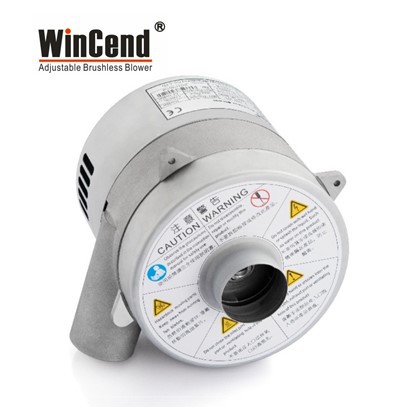
As a supplier of explosion-proof centrifugal fans, I understand the critical importance of monitoring various parameters to ensure the safe and efficient operation of these fans. In this blog post, I will discuss the key monitoring parameters for an explosion-proof centrifugal fan, which are essential for maintaining optimal performance and preventing potential hazards.
1. Temperature Monitoring
Temperature is one of the most crucial parameters to monitor in an explosion-proof centrifugal fan. High temperatures can indicate a variety of issues, such as overloading, friction, or poor ventilation. Excessive heat can not only damage the fan components but also pose a significant risk of explosion in hazardous environments.
To monitor the temperature, thermocouples or resistance temperature detectors (RTDs) are commonly used. These sensors are typically installed at key locations, such as the motor windings, bearings, and the air outlet. By continuously monitoring the temperature, any abnormal increases can be detected early, allowing for timely maintenance and preventive actions.
For example, if the temperature of the motor windings exceeds the recommended limit, it could indicate a problem with the electrical system or a mechanical issue. In such cases, the fan should be shut down immediately to prevent further damage and potential fire or explosion.
2. Pressure Monitoring
Pressure is another important parameter that needs to be monitored in an explosion-proof centrifugal fan. The pressure within the fan system can affect its performance and efficiency. Monitoring the inlet and outlet pressures can help identify any blockages, leaks, or abnormal flow conditions.
Pressure sensors, such as differential pressure transmitters, are used to measure the pressure difference between the inlet and outlet of the fan. This information can be used to calculate the fan's static pressure and determine if it is operating within the design specifications.
If the pressure drop across the fan is too high, it could indicate a clogged filter or a restriction in the ductwork. On the other hand, a low pressure drop may suggest a leak in the system or an underperforming fan. By monitoring the pressure, appropriate actions can be taken to address these issues and ensure the proper functioning of the fan.
3. Flow Rate Monitoring
The flow rate of the air or gas being moved by the explosion-proof centrifugal fan is a critical parameter that directly affects its performance. Monitoring the flow rate can help ensure that the fan is delivering the required amount of air or gas to the process.
Flow meters, such as pitot tubes, orifice plates, or ultrasonic flow meters, can be used to measure the flow rate. These devices provide accurate and real-time data on the volume of air or gas passing through the fan.
If the flow rate is lower than the desired level, it could indicate a problem with the fan's impeller, a blockage in the ductwork, or an issue with the system's resistance. By monitoring the flow rate, adjustments can be made to the fan's speed or the system's configuration to optimize the performance.
4. Vibration Monitoring
Vibration is a common issue in centrifugal fans and can be caused by various factors, such as unbalanced impellers, misaligned shafts, or loose components. Excessive vibration can not only damage the fan but also lead to noise, reduced efficiency, and potential safety hazards.
Vibration sensors, such as accelerometers, are used to monitor the vibration levels of the fan. These sensors can detect both the amplitude and frequency of the vibration, allowing for the identification of any abnormal vibrations.


If the vibration levels exceed the acceptable limits, it could indicate a problem with the fan's mechanical components. In such cases, the fan should be inspected and repaired to prevent further damage and ensure safe operation.
5. Motor Current Monitoring
The motor current is an important parameter that reflects the electrical load on the explosion-proof centrifugal fan. Monitoring the motor current can help detect any abnormal electrical conditions, such as overloading or short circuits.
Current sensors, such as current transformers or Hall effect sensors, are used to measure the motor current. By continuously monitoring the current, any sudden changes or abnormal increases can be detected early, allowing for timely intervention.
If the motor current exceeds the rated value, it could indicate a problem with the motor or the electrical system. In such cases, the fan should be shut down immediately to prevent damage to the motor and other components.
6. Speed Monitoring
The speed of the explosion-proof centrifugal fan is a critical parameter that affects its performance and efficiency. Monitoring the fan speed can help ensure that it is operating at the optimal speed for the application.
Speed sensors, such as tachometers or encoders, are used to measure the fan speed. These sensors provide accurate and real-time data on the rotational speed of the fan.
If the fan speed is too high or too low, it could indicate a problem with the motor or the control system. By monitoring the speed, adjustments can be made to the fan's speed to optimize its performance.
7. Air Quality Monitoring
In some applications, it is important to monitor the air quality in the vicinity of the explosion-proof centrifugal fan. This is particularly important in hazardous environments where the presence of flammable or toxic gases can pose a significant risk.
Air quality sensors, such as gas detectors or particulate matter sensors, can be used to monitor the concentration of various gases and particles in the air. These sensors can provide real-time data on the air quality, allowing for timely actions to be taken to ensure the safety of the environment.
If the air quality exceeds the acceptable limits, it could indicate a leak or a problem with the ventilation system. In such cases, the fan should be shut down immediately, and appropriate measures should be taken to address the issue.
Conclusion
Monitoring the key parameters of an explosion-proof centrifugal fan is essential for ensuring its safe and efficient operation. By continuously monitoring the temperature, pressure, flow rate, vibration, motor current, speed, and air quality, any potential issues can be detected early, allowing for timely maintenance and preventive actions.
As a supplier of explosion-proof centrifugal fans, we offer a range of high-quality products that are designed to meet the specific requirements of various applications. Our High-efficiency Centrifugal Blower, Frequency Conversion Centrifugal Fan, and AC Centrifugal Fan are all equipped with advanced monitoring systems to ensure reliable and safe operation.
If you are interested in learning more about our explosion-proof centrifugal fans or have any questions about the monitoring parameters, please feel free to contact us for a detailed discussion. We are committed to providing our customers with the best products and services to meet their needs.
- To learn more about explosion-proof blowers
- Welcome to: WinCend Technology (Shen Zhen) Co.,Ltd
- Company Website: www.wend.com
- Company Email: sales@wincend.com
- WhatsApp: +8613927471127